Manufacturers today are under more pressure than ever.
Production demands are increasing. Labor is harder to find. Margins are tighter. And at the same time, expectations around traceability, consistency, and speed continue to rise.
The challenge isn’t just keeping up—it’s finding ways to operate smarter.
For many companies, the biggest opportunity lies in their packaging and end-of-line processes. These areas are often overlooked, but they have a direct impact on cost, throughput, and overall efficiency.
At Adaptive Innovations, we work with manufacturers to identify these opportunities and implement solutions that deliver measurable results—integrating proven technologies from partners like Engage Technologies Corporation into real production environments.
Here’s where we’re seeing the biggest impact in 2026.
Eliminate Labels (and the Problems That Come With Them)
Traditional labeling systems are one of the most common—and costly—inefficiencies in packaging operations.
They require ongoing consumables, frequent maintenance, and can fail in challenging environments like cold storage, dust, or high-speed lines. Over time, these issues add up to high cost and downtime.
Direct-to-surface printing changes that.
High-resolution coding systems allow you to print directly onto your product or packaging, eliminating the need for labels entirely.
The benefits are immediate:
- Remove recurring label costs
- Avoid label failures in harsh or cold environments
- Print clean, scannable barcodes—even on uneven surfaces
- Reduce maintenance and operator intervention
In many applications, companies can reduce coding costs dramatically while improving reliability at the same time.
Automate End-of-Line Packaging to Increase Throughput
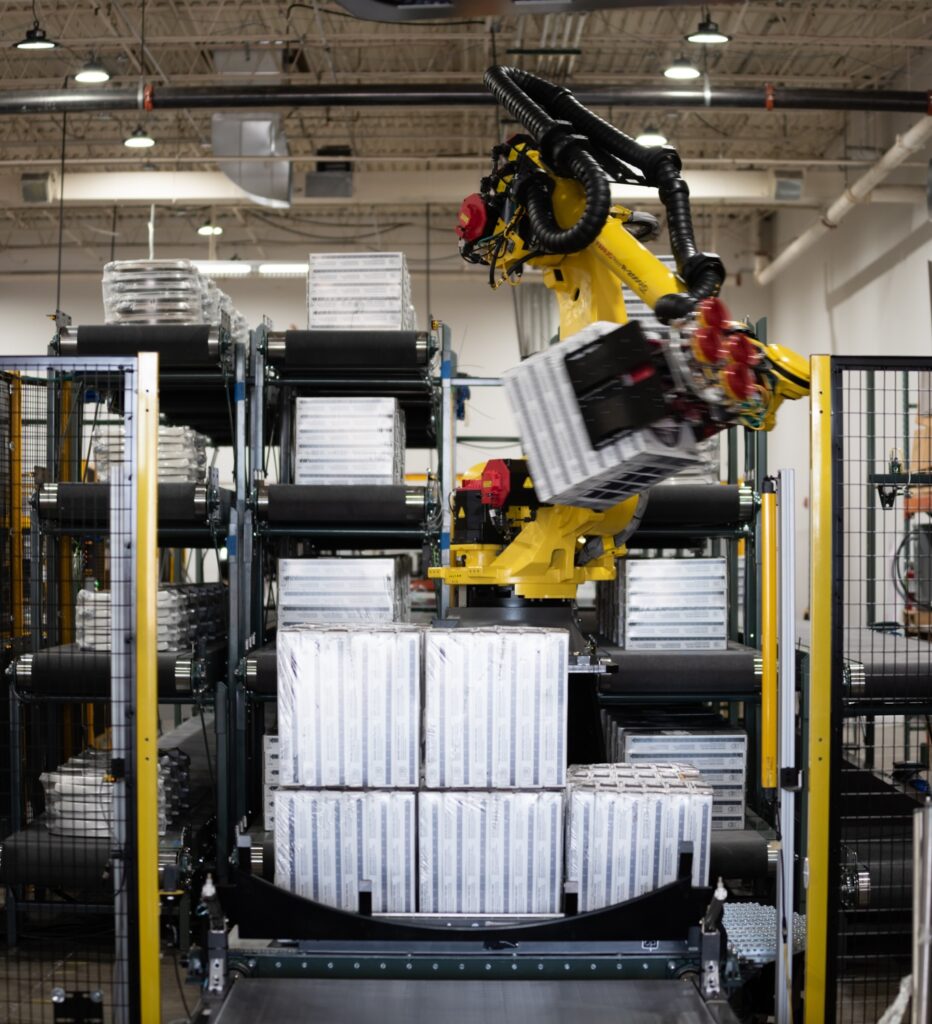
End-of-line packaging is one of the most common bottlenecks in production.
Manual case forming, inconsistent sealing, and slow packaging processes can limit the output of an otherwise efficient line.
Automation solves this by introducing consistency and speed where it matters most.
Modern shrink systems and case handling equipment are designed to keep pace with production demands while reducing reliance on manual labor.
With the right system in place, manufacturers can:
- Increase throughput (often reaching 35–40 cycles per minute)
- Improve packaging consistency and quality
- Reduce labor requirements and operator fatigue
- Minimize errors and rework
The result is a smoother, more predictable operation that can scale with demand.
Improve Shelf Appeal Without Adding Complexity
In competitive markets, packaging plays a critical role in how products are perceived.
But improving shelf presence doesn’t have to mean adding complexity to your operation.
Shrink sleeve labeling offers a flexible, high-impact solution.
With full 360° coverage, shrink sleeves allow brands to maximize visual real estate without changing container types. This makes it easier to manage multiple SKUs while maintaining a consistent packaging format.
Key advantages include:
- Eye-catching, full-body graphics
- Greater flexibility across product lines
- Faster changeovers between SKUs
- Improved product differentiation on the shelf
When implemented correctly, shrink sleeves enhance both marketing and operational efficiency.
Reduce Total Cost of Ownership—Not Just Upfront Cost
One of the most common mistakes manufacturers make is evaluating equipment based solely on purchase price.
In reality, the upfront cost is only a small part of the equation.
The true cost of any system includes:
- Consumables (labels, ink, film, etc.)
- Maintenance and service
- Downtime and lost production
- Labor required to operate and maintain the system
This is where Total Cost of Ownership (TCO) becomes critical.
A lower-cost machine may seem like the better option initially, but if it requires more consumables, more maintenance, or more downtime, it can quickly become the more expensive choice over time.
That’s why forward-thinking manufacturers are shifting their focus to ROI and long-term performance.
By investing in systems designed for efficiency and reliability, companies can:
- Lower operating costs
- Improve uptime
- Achieve faster returns on investment
- Build more predictable production processes
Why Implementation Matters More Than Equipment
Even the best equipment won’t deliver results if it’s not implemented correctly.
This is where many projects fall short.
Successful packaging optimization requires more than just selecting the right machine—it requires a complete understanding of how that system fits into your operation.
That includes:
- Integration with existing equipment
- Proper setup and calibration
- Operator training
- Ongoing support and optimization
Without these elements, even high-quality equipment can underperform.
Where Adaptive Delivers More Value
At Adaptive Innovations, we focus on outcomes—not just equipment.
We don’t just supply systems. We make sure they work within your operation and continue delivering value over time.
Our approach includes:
System Integration
We ensure every solution fits seamlessly into your existing production line.
Consumables & Supply
We provide a reliable source for inks, films, and replacement parts—so you’re never left waiting.
Ongoing Support
From installation to long-term optimization, we stay involved to keep your systems performing.
Scalable Solutions
As your production grows, your systems should grow with you.
The Bottom Line
Reducing packaging costs and increasing throughput isn’t about one single upgrade.
It’s about identifying the right opportunities, implementing the right solutions, and optimizing performance over time.
For many manufacturers, the biggest gains come from:
- Eliminating unnecessary consumables
- Automating bottlenecks
- Improving consistency and reliability
- Focusing on long-term ROI instead of short-term cost
Ready to Optimize Your Packaging Line?
If you’re evaluating packaging, coding, or automation upgrades, the best place to start is with your current process.
We can help you identify:
- Cost-saving opportunities
- Bottlenecks and inefficiencies
- Automation opportunities
- The best path forward for your operation
Let’s talk through your application and explore what’s possible.