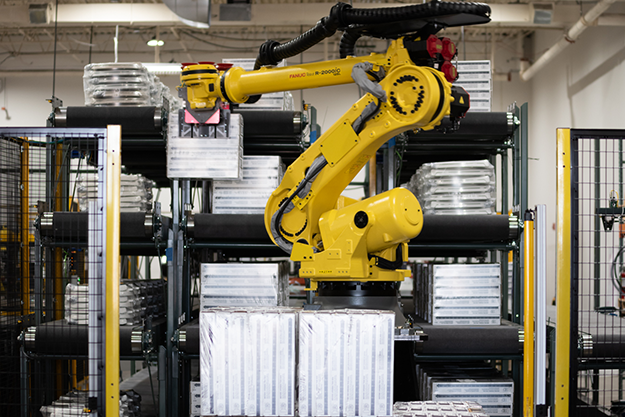
Establishing a quality control plan, training staff, and using automated quality control tools are crucial steps in ensuring that the quality control process is efficient, effective, and accurate. Manufacturers must prioritize quality control in palletizing automation to maintain a competitive edge in the market and meet customer expectations.
By prioritizing quality control in palletizing automation, manufacturers can also enjoy other benefits, such as reducing waste, minimizing the need for rework, and improving their bottom line.
Overall, it is clear that quality control is an essential aspect of palletizing automation. By implementing a comprehensive quality control process, manufacturers can improve their overall operations, meet customer expectations, and maintain their position in the market.
FAQs
Q: What is assembly automation?
Assembly automation is the use of machines, robotics, tooling, and controls to complete product assembly tasks with greater consistency and speed than manual methods alone. It is often introduced to improve throughput, quality, and labor utilization.
Q: How do you choose the right assembly automation solution?
The right solution depends on product complexity, required throughput, part variation, quality risks, labor constraints, and how the automated step will connect with upstream and downstream operations. Good selection starts with the actual process problem, not the technology first.
Q: What should a manufacturer consider before automating assembly?
A manufacturer should evaluate takt time, part stability, fixturing needs, traceability requirements, expected ROI, changeover demands, and whether the assembly process is stable enough to automate effectively. The strongest projects start with repeatable problems and clear performance targets.